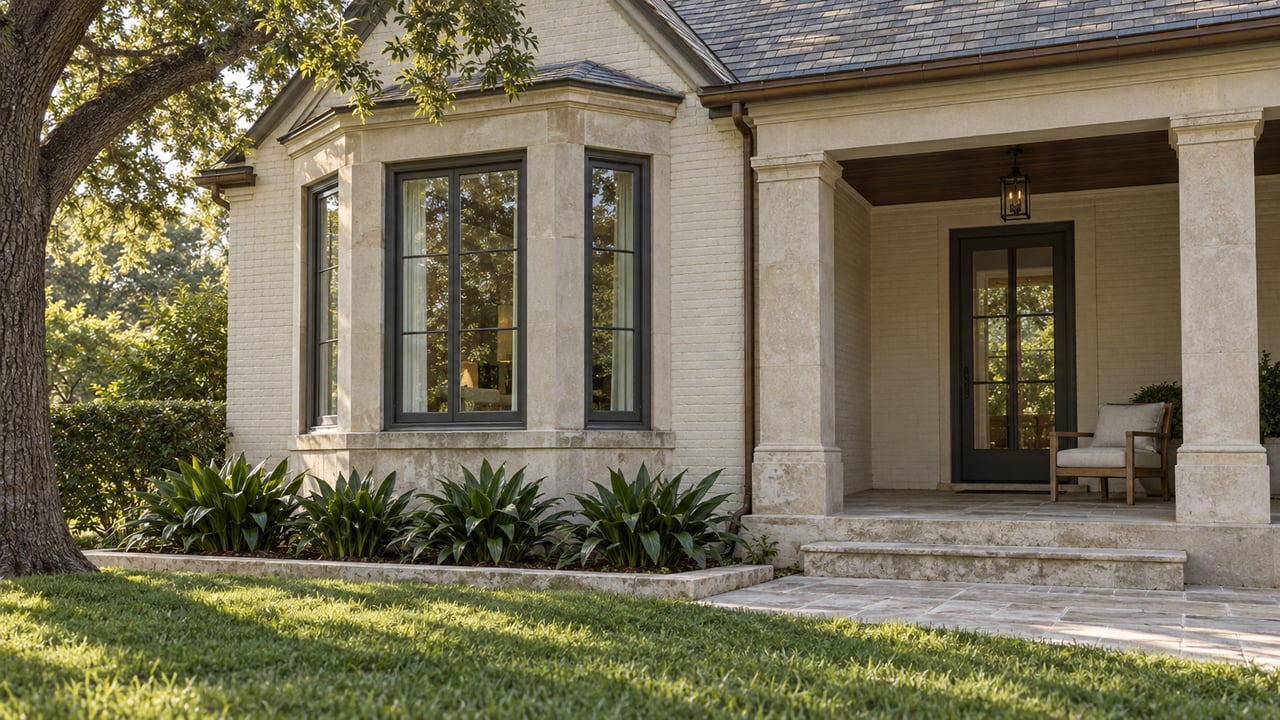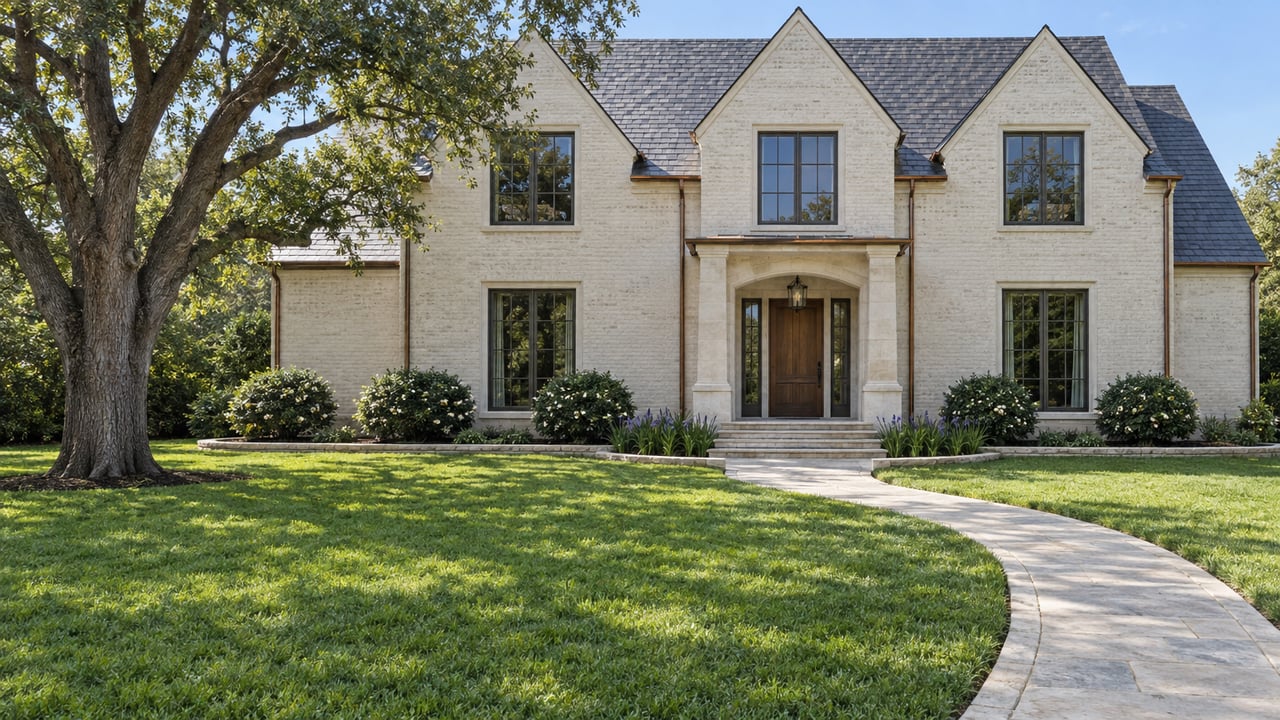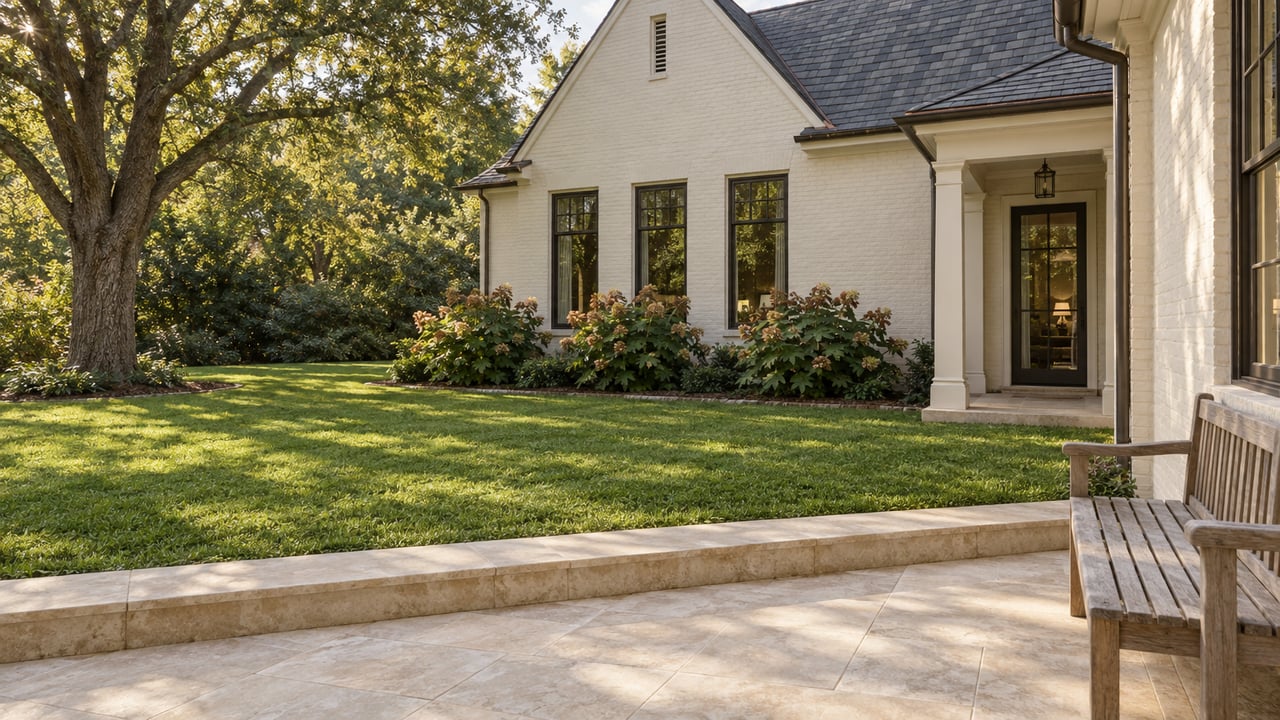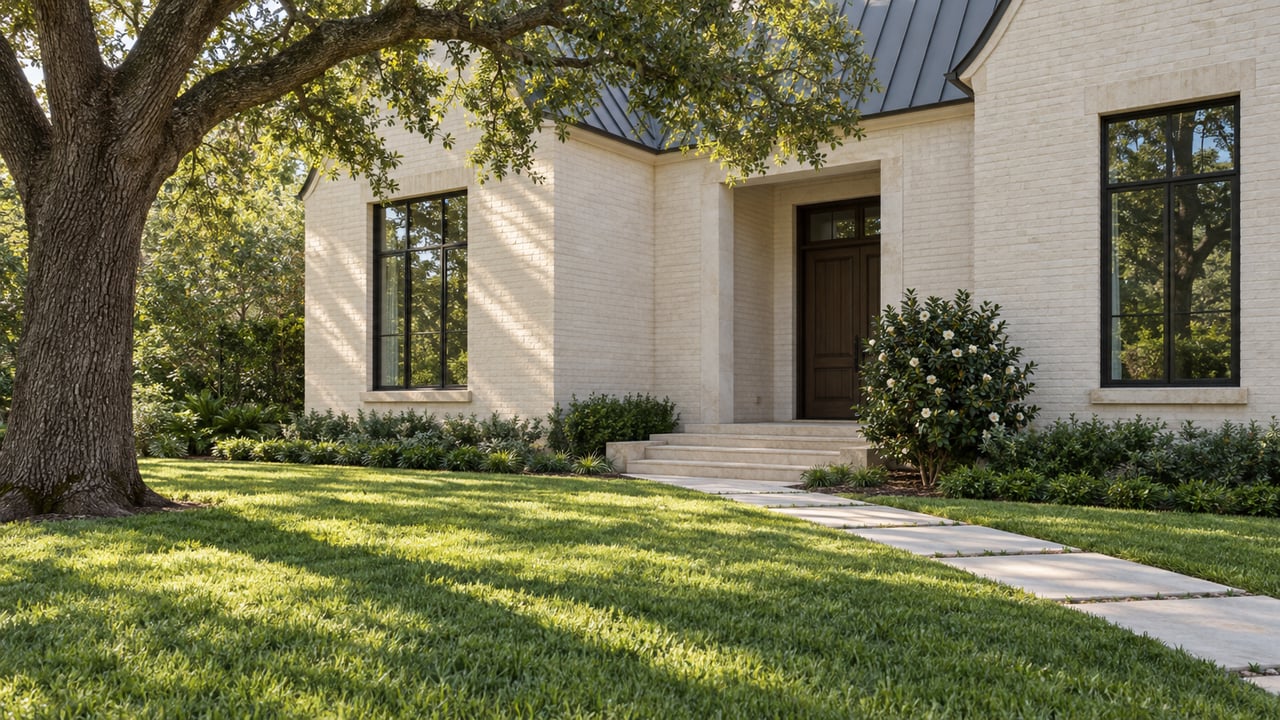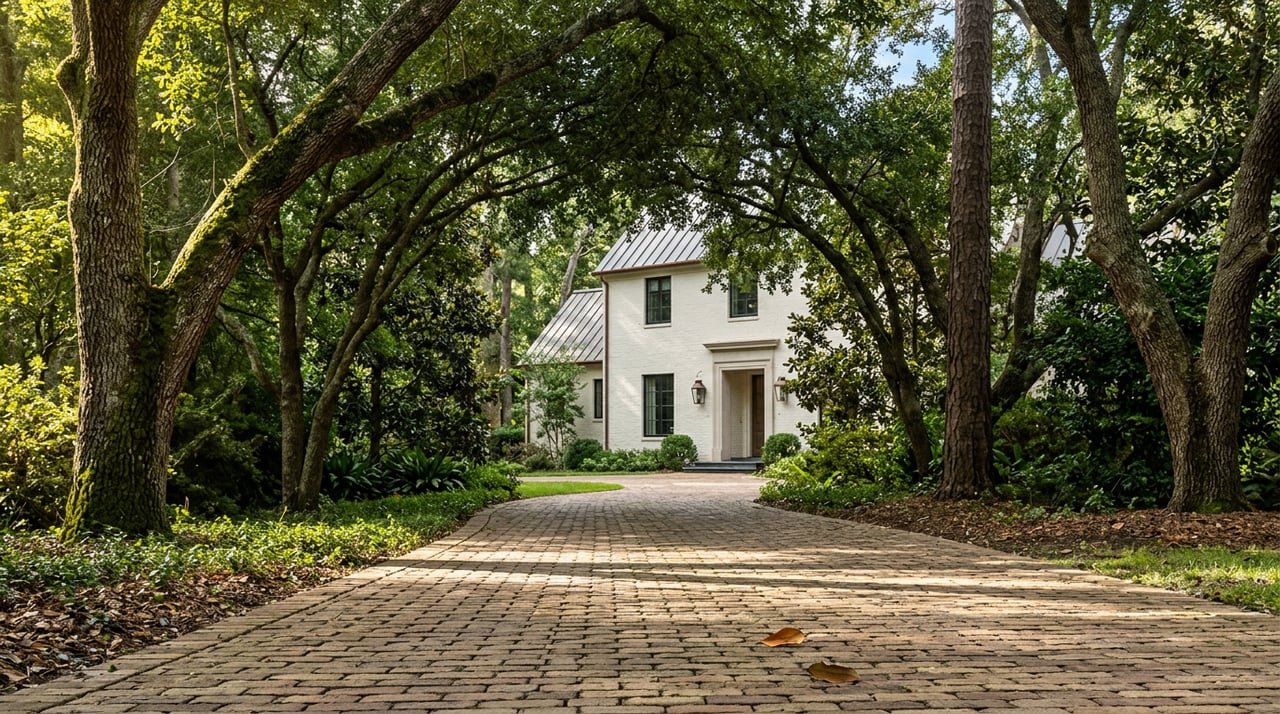
Two homes sold last fall within a mile of each other in Piney Point Village. One was listed at $3.4 million and closed in the $2.5M–$2.88M band. Another, listed at $2.695 million, closed inside the same band. Same village, similar square footage, wildly different starting positions, nearly identical outcomes. If you were pricing a Piney Point home off the neighborhood median, you would have missed both stories.
Buyers comparing Houston's premier neighborhoods usually arrive with a headline number in hand. In this village, that number is misleading in a way that is easy to miss until you are already writing an offer.
What the medians actually say, and why they disagree
Pull the Memorial Villages numbers from the Houston Association of Realtors' May 2026 update and the picture looks orderly: a median sold price of $2,821,620, 3.7 months of inventory, an average of 33.1 days on market, and listings up 19.6% year over year. Zoom into Piney Point Village on its own and the picture stops being orderly. Three separate data pulls from spring and summer 2026 put the average Piney Point sale between roughly $4.5 million and $4.8 million, at $618 to $644 per square foot, while a 2025 appraised-value snapshot for the same village hovered near $2.64 million.
That is not a rounding error. Median appraised value near $2.6M and average sale near $4.7M describe two different housing stocks living inside the same 2.1 square miles.
Recent named sales make the dispersion legible:
| Address | Sold | List price | Sold band |
|---|---|---|---|
| 11310 Iris Lee Ln | Mar 2026 | $2,900,000 | $2.88M–$3.32M |
| 11340 Holidan Way | Nov 2025 | $2,695,000 | $2.50M–$2.88M |
| 11305 Green Vale Dr | Oct 2025 | $3,400,000 | $2.50M–$2.88M |
| 11506 Habersham Ln | Jul 2025 | listed $7,995,000 | closed at $695/sqft, 11,501 sqft, built 2024 |
Four transactions, a spread from the mid-$2 millions to nearly $8 million, and every one of them a legitimate Piney Point comp on paper. Averaging them tells you almost nothing about what any single property will trade for. The interesting question is why the range is this wide in the first place.
The village acre
Piney Point permits only single-family residences, and its zoning sets a minimum lot size of 40,000 square feet, a figure long enough in the local vocabulary that residents call it the village acre. Smaller lots exist, but only because they were platted before the rule and were grandfathered in. You can read the ordinance itself in the village's code of ordinances.
That single rule is doing more work on price than any comp analysis will show you.
A 40,000-square-foot lot in Piney Point is not a bigger version of a 20,000-square-foot lot. It is a different asset class, with a different buyer, a different build ceiling, and a different resale story.
Two houses with similar square footage can sit on lots that differ by a factor of three. On a village-acre lot with mature canopy, the buyer is often pricing the land and treating the structure as replaceable. On a grandfathered half-acre lot, the buyer is usually pricing the house. Same MLS area, opposite valuation logic. Any median that mixes both is describing a composite home that does not exist.
The trees are part of the price
Piney Point's rules on tree work sit at the intersection of aesthetics, environmental policy, and resale value. A live tree three inches or more in diameter requires a removal permit from the city. Trimming stays permit-free only if no more than 25% of the crown comes off at a time. Renovations, additions, pools, fences, irrigation, and window and door replacement all route through the city's permit process.
For a buyer, this is transaction-relevant in a specific way. The tree canopy that makes a lot beautiful is also part of what constrains where a future addition or pool can go. Two lots of identical dimensions can have very different build envelopes once the protected specimens are mapped. When a listing agent tells you a lot is "cleared and ready," verify what the city says before you assume that translates into design freedom. It is also worth remembering that this is a residential-only city, which is a large part of why the streets stay quiet and why every square foot of ground is a housing decision, not a mixed-use one.
The Buffalo Bayou line
Piney Point sits across two school districts. Homes north of Buffalo Bayou fall inside Spring Branch ISD. Homes south of the bayou fall inside Houston ISD. The Kinkaid School, one of the region's oldest independent day schools, is located inside the village itself. A buyer who assumes a single school assignment across Piney Point will be wrong roughly half the time, and the assignment materially affects both the buyer pool and the resale story on any given street. Confirm the district and campus before you fall for the block.
The tax stack, in plain view
Property tax bills in Piney Point are layered in a way that surprises buyers coming from cities with a simpler structure. A single homestead can be assessed by Spring Branch ISD, Harris County, Harris County Flood Control, the Port of Houston Authority, Harris County Hospital District, Harris County Department of Education, the City of Piney Point Village, and the Memorial Villages Water Authority. The city's own rate for FY 2025-2026 is $0.255140 per $100 of assessed value, which the city budget documents as roughly $6,774 in city tax on a median-valued homestead. That is only the city slice.
The Harris Central Appraisal District applies a 10% annual cap on appraised-value increases for owner-occupied homesteads, which matters when you are looking at a longtime owner's tax bill and trying to model your own. The current owner's number is not your number. Rebuild it from January 1 market value and the current combined rate before you use it in any affordability calculation.
What this means before you tour
Piney Point rewards the buyer who has done the work on three things before setting foot in a house: the lot, the school line, and the tax reconstruction. Everything else is decoration. The village's Memorial Villages Police Department and Village Fire Department, the private-club orbit around Houston Country Club and the Houston Racquet Club, the proximity to CityCentre and Memorial Park, all of that is real, and all of that is priced into every listing already. What is not fully priced into a listing is whether the parcel underneath it is a village acre, a grandfathered half-acre, or something in between, and what the tree map allows you to do with it.
Houston's June 2026 luxury tier stayed active, with $1 million-plus sales rising 17.1% year over year while the broader market held near a $345,000 median. In the Memorial submarket specifically, well-prepared homes have been trading in around 38 days, down from 52 a year earlier. Well-prepared is doing the work in that sentence. A Piney Point home priced off a village-wide average, without regard to lot and condition, is not well-prepared, regardless of how it shows.
A few questions that come up in first meetings
If the median is unreliable, what should I anchor to instead? Comparable sales on lots within roughly 20% of your target's square footage, in the same school assignment, adjusted for condition. Three tight comps beat thirty loose ones.
Are teardowns still common on the older, smaller lots? Yes, and the arithmetic gets interesting on grandfathered parcels below the 40,000-square-foot threshold, because the current structure may be the only reason a smaller footprint is legal on that lot. Ask before you assume a rebuild path.
How much of the market trades off-MLS? Enough that a buyer without local relationships will see a filtered version of the inventory, particularly at the top of the range.
If you are weighing Piney Point against the rest of Memorial or against River Oaks and want a lot-by-lot read rather than a village-wide average, Blake Kunetka welcomes a private conversation. Schedule a Private Consultation.